
Vourliotes & Manolates
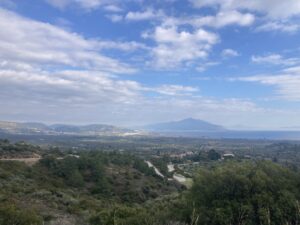
Vourliotes sits on a beautiful, green mountainside filled with plane trees, olive groves, and vineyards, on the southern side of Mount Ampelos. From here, you can see for miles across the island, about 360 meters above sea level, and it’s wonderfully central: just nine kilometers from Kokkari and twenty from Samos Town.
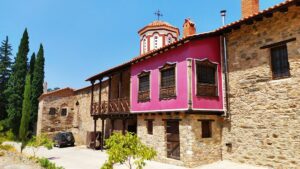
The village has a fascinating history: its original inhabitants came from Vourla in Turkey, giving the village its name. Walking through the narrow streets, you immediately feel its authentic charm. Highlights include the Byzantine Church of Agios Ioannis, the Louloudas Castle just outside the village, and the Monastery of the Holy Mother Vrondiani from the 15th century. Slightly further out are the Lazaros Castle and remains of a medieval settlement – perfect for a short historical stop.
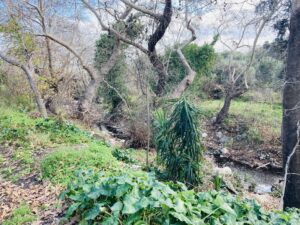
For walkers, this area is a paradise. There are marked mountain trails everywhere, and the scenery is breathtaking. My favorites? The Valley of the Nightingales and the Pinaka Spring, just two kilometers away – flowing water, plane trees as far as the eye can see, and a peacefulness you won’t find anywhere else.
Today, about 700 people live here, and the village square buzzes with cozy cafés and restaurants. Surrounding Vourliotes, vast vineyards produce excellent local wine – a real treat after a day of hiking or exploring.
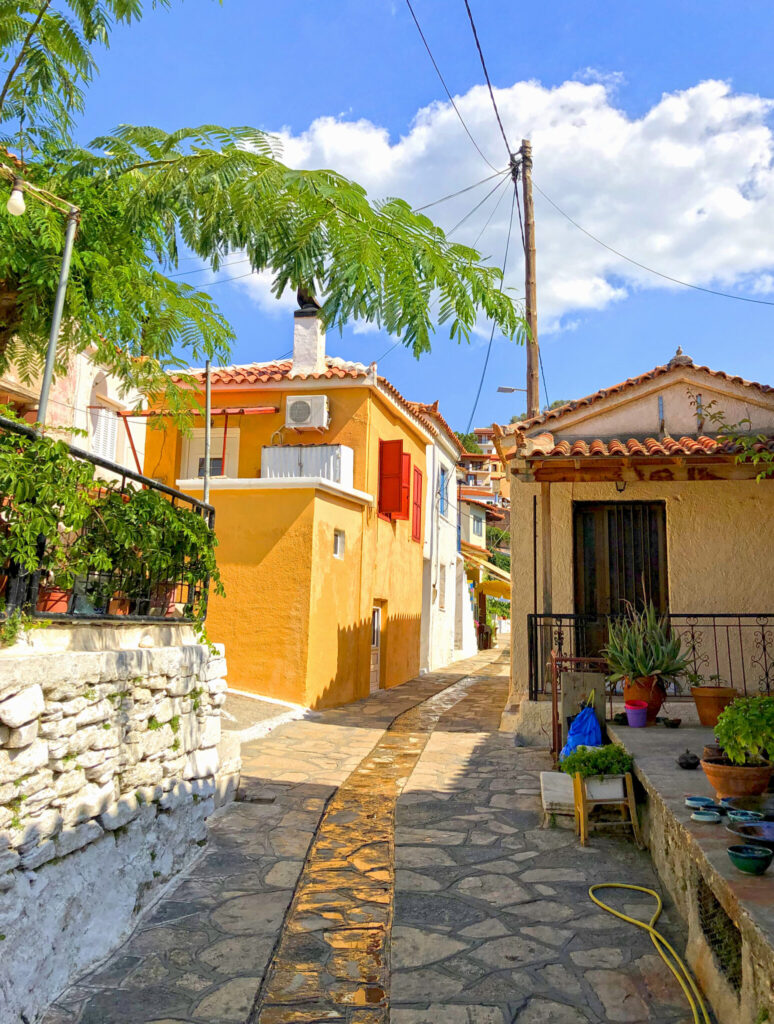
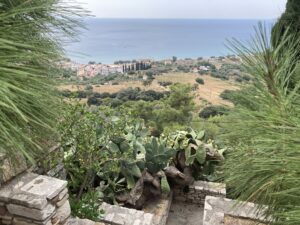
The drive to Manolates itself is an adventure: green forests stretch as far as the eye can see, winding roads revealing new views at every turn. And once you reach the top… wow! The village sits beautifully, with a panoramic view that instantly makes you pause.
Manolates got its name from a man called Manolis, who settled here at the end of the 18th century. Today it’s a small but charming village with about 200 residents, whose lives revolve around agriculture, crafts, and tourism. You still feel the authentic village life here, mixed with a relaxed, welcoming atmosphere that immediately puts everyone at ease. These two villages are close together, so it’s easy to visit both in a single trip.
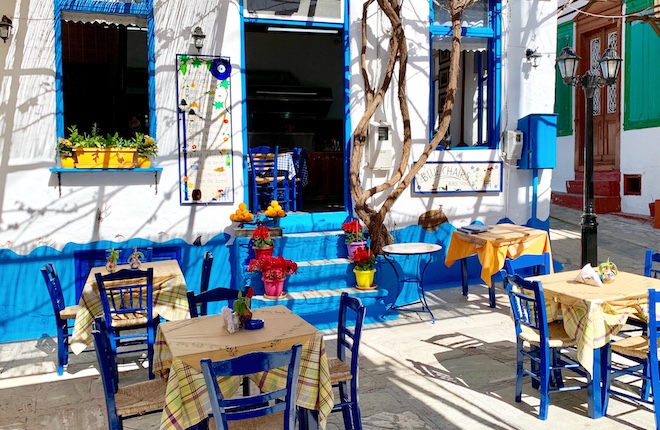
Wander through shops filled with handmade art, discover cozy tavernas, and try to find Taverna Lukas at the very top – the view from there? Absolutely wow.
Pythagorion
Ah, Pythagorion… a charming harbor village that immediately makes you want to stroll around. Walk along the boulevard and spot all the bars and restaurants – perfect for an ice cream, a drink, or just some people-watching.
See the boats floating in the harbor: from charming Greek fishing boats to sleek yachts, it’s a feast for the eyes. Don’t miss the Blue Street, the Pythagorion Museum, and the stunning church right by the sea. Everything here feels relaxed, picturesque, and oh-so-Greek.
Pythagorion also offers numerous small-scale hotels, apartments, and B&Bs. It’s an ideal, central base to explore the island. And yes… there are several lovely beaches to relax on, enjoy the sun, the sea, and the views.
We’ve visited Pythagorion several times during our holidays. The first time we stayed at Lithos Hotel, right in the middle of the corona period. It was wonderfully quiet – we almost had the entire island to ourselves. From our balcony, the sea stretched endlessly, and we were handed the key to that huge, charming wooden front door. The hotel was beautifully furnished, the rooms spotless, and it felt like a perfect spot to fully unwind.
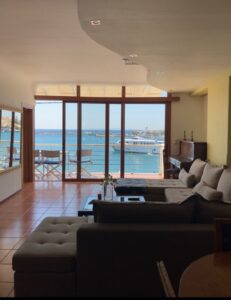
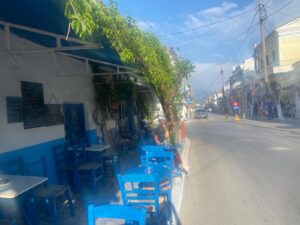
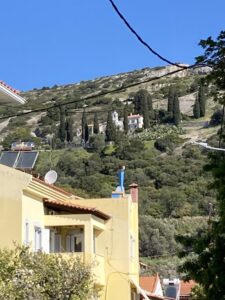
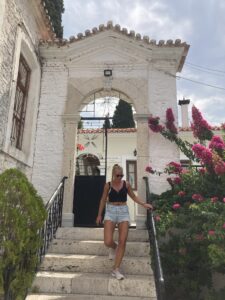
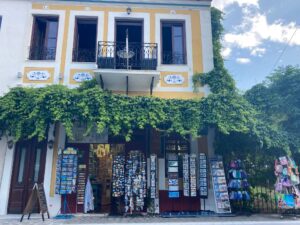
Later, we tried a few B&Bs in Pythagorion. Dolici View, right on the boulevard, was a former restaurant transformed into a loft-style space – beautiful, but the boulevard can get lively. Then there was B&B I Love Samos, where we had cheerful daily chats with our Greek neighbor – truly feeling like part of the local life. We always look for the most charming stays on Booking.com or Airbnb.
Other good hotels in Pythagorion include Athina Hotel and Mykali Hotel. Friends and family who stayed here were very happy – warm hospitality, excellent locations, and lovely accommodations with pools to cool off. Perfect for those wanting to explore the island comfortably.
Our absolute favorite, especially during our honeymoon (and many times after), is Villa Samos in Pountes. Just outside Pythagorion, high on a hill – what a magical place! The views, the atmosphere, everything felt perfect.
Kokkari
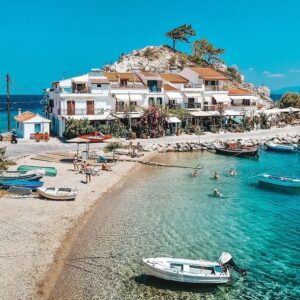
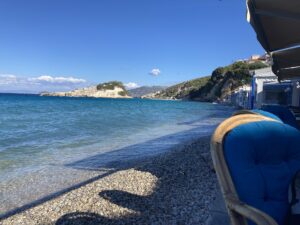
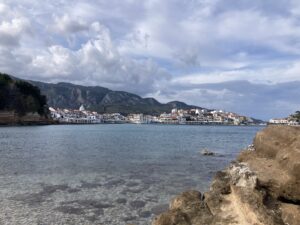
This cozy village lies about 10 kilometers northwest of Samos Town (Vathy) and is one of the island’s most popular seaside spots – and it’s easy to see why.
The village revolves around its harbor, lined with restaurants and bars. I could sit for hours, people-watch, sip a drink, and gaze at the crystal-clear waters. The atmosphere is friendly everywhere, and the locals are warm and helpful. Whether you step into a taverna, kafeneion, or bar, you instantly feel welcome.
What makes Kokkari extra special are the two lively waterfront boulevards, perfect for an evening stroll or a sunset walk. During the day, explore the picturesque streets or discover nearby beaches.
The surroundings are stunning: vineyards, pine trees, and olive groves stretch as far as the eye can see. Crystal-clear water, fun water sports, and a relaxed, idyllic vibe make Kokkari a place to truly unwind.
It’s also a great base: several small hotels and B&Bs allow you to explore northern Samos while enjoying sun, sea, and relaxation.
Ireon
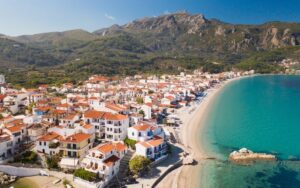
This quaint harbor town on Samos is about 19 kilometers from Samos Town, close to the airport and just a short distance from Pythagorion. It’s a delightful vacation spot while retaining the charm of a traditional Greek fishing village.
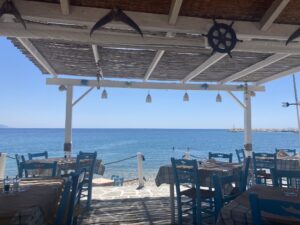
On the southern side is a picturesque pier, with fishing boats bobbing gently. Along the waterfront, cozy tavernas serve fresh fish year-round. The small but lively center features souvenir shops, supermarkets, bars, and restaurants, connected by narrow streets perfect for wandering.
Ireon is named after the Greek goddess Hera, and the famous Heraion Temple is within walking distance. I visited it myself and could admire the temple’s remains every day – a piece of history you can almost touch.
For beach lovers: Polykrates Beach stretches from Ireon to Pythagorion, about six kilometers along the water. A bit further, half a kilometer from the harbor, are smaller beaches like Papa Beach, complete with sunbeds, umbrellas, and a beach bar for a bite and a drink.
Charming and compact, Ireon has everything you need for a relaxed stay, with hotels, apartments, and other accommodations scattered throughout the village and surroundings.
Samos Stad (Vathy)
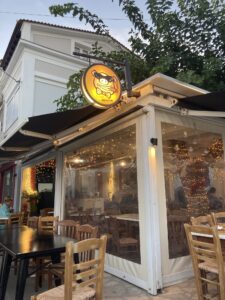
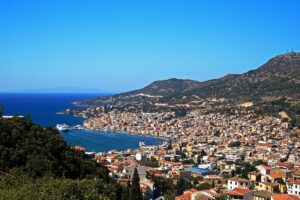
Located in the northeast, in a stunning deep bay – hence the name Vathy, meaning “deep” in Greek. The picturesque neighborhood atop the hills is also called Vathy. Walking through its narrow streets with traditional houses is a must.
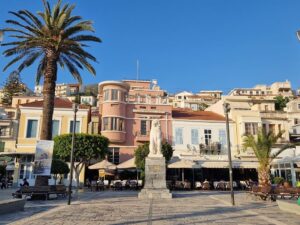
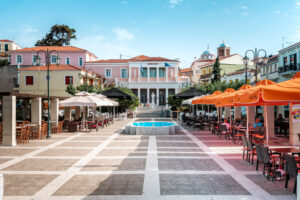
The town sprawls along the hills, with beautiful churches, large and small squares, and charming neoclassical buildings. The main harbor is here, and the bustling heart is Pythagoras Square, featuring a marble lion. Recently renovated, the square offers cafés, restaurants, and terraces perfect for people-watching. The main street near the harbor has more eateries, and the long seaside promenade with benches and playgrounds makes for a pleasant family stroll.
There aren’t many large beaches in town, but Gangos Beach, northwest of the town, is a lovely spot to cool off. Culture lovers shouldn’t miss the Archaeological Museum and the Wine Museum – excellent stops to learn more about the island’s history and flavors.
Mili (Myloi)
Mili lies along the Imvrásos River, a truly special spot. The village takes its name from the water mills that once lined the river, powered by its flowing water. It feels like stepping back in time.
Mili is the oldest village on Samos, built by settlers who arrived with Sarakínis, one of the first inhabitants. It was once known as “the village of Kilitz Ali Pasha,” as old Turkish documents show. In the 17th century, it was densely populated, but later declined due to malaria – locals say a despotic curse caused this, adding a touch of mystery.
The village sits in a lush valley still producing oranges and lemons, with a joyful annual orange festival each spring. In the past, tobacco was grown here, but today citrus trees and olives dominate. One of Samos’ oldest olive trees, Eva, still stands proudly.
For creative vibes, visit the ceramics shop of Oléna and Sákis along the main road – a lovely memento of the village.
Mili blends history, nature, and tradition. Walking through the narrow streets, smelling citrus trees, you feel centuries of stories and the warmth of modern village life.
Karlovasi
Visiting Karlovasi feels different from a typical Greek seaside town. It’s the second largest city on Samos, in the northwest, about 34 kilometers from Samos Town. The city consists of New Karlovasi, Middle Karlovasi, and Old Karlovasi, earning the nickname “De Karlovasia” from locals.
Notable features are the tanneries and shipyards, shaping the city’s character. Once very wealthy, you can still see its grandeur in numerous mansions. Less touristy than Kokkari or Pythagorion, it has a strong local vibe, with museums, universities, and shopping streets.
The most charming area is Palio Karlovasi, the old town south of the harbor. On the hilltop stands the impressive Agia Triada Church, a perfect spot to pause and enjoy the view over the city and harbor.
Karlovasi may not be a party town, but it’s full of character, history, and surprises, a must-see for anyone wanting to experience Samos authentically.
Southwest & coastal villages
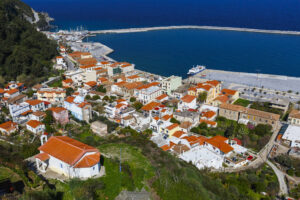
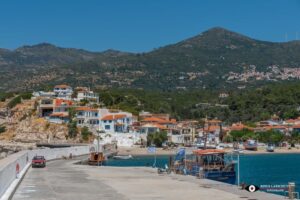
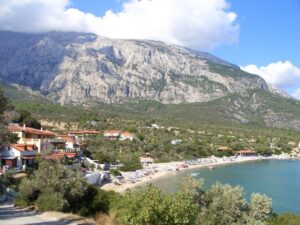
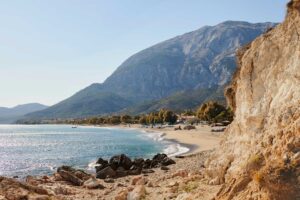
Marathokampos lies in the southwest, along the Marathokampos Bay, high on the slopes near the Kerkis Mountains. Narrow streets, arches, and vaults guide you past traditional houses, giving the village an authentic charm.
The region also includes Agia Kiriaki, Koumeika, Neochori, and Skoureika, with coastal villages like Votsalakia (also Kambos), Pefkos, Limnionas, Psili Ammos, Balos, Valsamo, and Makria Pounta – all perfect for day trips.
In Marathokampos, visit the manor of Stamatis Georgiadis. Walking through the car-free streets, enjoy small squares, cozy corners, and beautiful churches. The surroundings are stunning: olive groves, impressive caves like the Pythagoras Cave, Panagia Sarantaskaliotissa (Forty Steps), and Kakoperato Cave, ideal for short excursions or hikes. At the mountain’s base lies the Evangelistria Monastery, a peaceful retreat.
And then there’s the view… from Marathokampos, you can see the whole bay, and in the distance, the island of Fourni near Ikaria.
Which villages are your favorites? Leave a comment!